
Internal Web Application Testing

Internal Web Application Testing
Case Study
Background
The client operates within the energy and critical infrastructure sector, supporting complex operational and business functions through a centralized IT environment. Its technology landscape includes internally hosted web applicationsthat enable operational workflows, administrative tasks, user management, and data processing activities. These applications are accessible within the internal network and form an integral part of day-to-day business operations.
Given the critical nature of its operational technology environment and its growing reliance on interconnected digital systems, the organization sought to obtain a clearer understanding of the security posture of its internally accessible web applications. Specifically, leadership sought to evaluate whether existing security controls, including web application firewalls, access restrictions, encryption practices, application configurations, and server-level protections, were effectively mitigating internal threat scenarios and common web-application attack vectors.
To address this need, the organization engaged Real Secure IT to perform an Internal Web Application Penetration Testing engagement aligned with recognized industry methodologies, including the OWASP Top 10 framework. The assessment was designed to simulate realistic internal attacker scenarios, identify exploitable vulnerabilities across the application stack, and provide a structured evaluation of the organization’s web application security posture. The outcome of the assessment provided leadership with visibility into current risks and a prioritized basis for remediation and security enhancement planning.
Challenge
Like many organizations operating within the energy and critical infrastructure sector, the organization had implemented foundational security controls to protect its internal digital environment. These included network access restrictions and the deployment of a Web Application Firewall (WAF) to defend against common web-based threats. However, while such controls provided perimeter and traffic-level protection, they did not offer comprehensive visibility into the security posture of internally hosted web applications.
As the internal application landscape expanded to support operational workflows, administrative services, and data processing functions, the complexity of the environment increased. Multiple applications, technologies, and configurations were operating simultaneously across different internal systems. Although certain security measures were in place, there was limited assurance regarding how effectively authentication mechanisms, access controls, encryption configurations, and application-level protections were functioning when assessed from an internal threat perspective.
Furthermore, given the organization’s operational role in a critical infrastructure sector, unauthorized access to internal applications, disclosure of sensitive information, or exploitation of misconfigurations could have operational, regulatory, and reputational consequences. Without a structured and scenario-driven security assessment, leadership lacked a clear understanding of where exploitable weaknesses existed and which risks should be prioritized for remediation.
The challenge, therefore, was not merely identifying technical misconfigurations, but validating whether existing security controls were sufficient to withstand realistic internal attack scenarios and determining the extent to which the organization’s web application environment was exposed to potential exploitation.
Engagement Objectives
The primary objective of this engagement was to provide the organization with a clear and accurate evaluation of the security posture of its internally accessible web applications. The assessment focused on identifying exploitable vulnerabilities, validating the effectiveness of existing web application security controls, and determining the potential business impact associated with successful exploitation scenarios.
Specifically, the organization sought to:
- Identify and validate security vulnerabilities across internally hosted web applications, supporting servers, and related components
- Assess the effectiveness of existing technical controls, including authentication mechanisms, access controls, encryption practices, and web application firewall protections
- Evaluate the applications against common web-application attack techniques, including those defined in the OWASP Top 10 framework
- Determine the potential impact and exploitability of identified weaknesses under realistic internal attacker scenarios
- Prioritize findings based on risk severity, likelihood of exploitation, and potential operational impact
- Provide clear and actionable remediation recommendations to strengthen the organization’s internal web application security posture risk
By achieving these objectives, the engagement provides leadership and technical stakeholders with practical visibility into current application-layer risks, enabling informed remediation planning and strengthening the organization’s overall resilience against internal threat scenarios.
Engagement Value
The Internal Web Application Penetration Testing engagement provided the organization with a structured evaluation of the security posture of its internally accessible web applications, examining how vulnerabilities, configurations, and controls interact across applications, servers, and supporting components. Rather than focusing solely on individual technical issues, the assessment focused on understanding the broader impact of these vulnerabilities on operational workflows, data processing, and user management activities.
Conducting this assessment delivered several key benefits:
- Provided clear visibility into risks affecting internal web applications and their supporting infrastructure by identifying vulnerabilities that could realistically lead to unauthorized access, data exposure, or disruption of critical workflows.
- Enabled effective prioritization of remediation efforts by assessing the potential impact of each vulnerability, allowing high-risk findings to be addressed immediately while medium and low-risk issues were planned appropriately.
- Translated technical vulnerabilities into clear risk scenarios, supporting evidence-based remediation and mitigation planning.
- Improved alignment between cybersecurity risks and business impact by demonstrating how exposed web application weaknesses could affect day-to-day operations, data integrity, and internal processes.
- Strengthened adherence to industry best practices and standards by evaluating web application security against OWASP Top 10 guidelines and recommended internal security controls, identifying gaps that could be remediated to enhance overall governance and resilience.
By performing this assessment, the organization gained a proactive and informed understanding of its internal web application security posture, enabling leadership and technical teams to address risks proactively, reduce exposure to internal threats, and strengthen long-term operational resilience.
Scope Of Work
The engagement consisted of a comprehensive Internal Web Application Penetration Testing assessment, designed to provide a clear view of the security posture of the organization’s internally hosted web applications and associated systems. The assessment focused on evaluating the applications, their supporting infrastructure, and any exposed components within the internal network.
The following areas were included in the scope of the assessment:
- Internal Web Applications: Core internally hosted applications supporting operational workflows, administrative functions, user management, and data processing activities. This included evaluating application-level configurations, authentication mechanisms, and access management controls.
- Web Servers and Endpoints: Servers hosting the web applications, including all internal service endpoints, publicly accessible files, and administrative portals, focusing on potential exposure to internal threat actors.
- Configuration Files and Directories: Application directories and configuration files accessible within the internal network, evaluating whether sensitive information such as credentials or system details were exposed.
- Internal IP Addresses and Network Access Points: IP addresses associated with the application environment that are reachable within the internal network, including evaluation of unauthorized access possibilities.
By clearly defining this scope, the engagement ensured that all critical aspects of the organization’s internal web application environment were assessed. By focusing on these critical areas, the engagement provided leadership with visibility into potential vulnerabilities and established a structured basis for remediation planning and risk reduction.
Methodology
As part of this engagement, we conducted an Internal Web Application Penetration Testing assessment to evaluate the security posture of the organization’s internally accessible web applications. We simulated real-world attacker techniques from within the organization’s trusted network to identify vulnerabilities, logic flaws, and misconfigurations. Our objective was to identify weaknesses that could be exploited by malicious insiders, compromised endpoints, or attackers who had already gained internal access.
We combined reconnaissance, structured testing, controlled exploitation, and detailed reporting to validate findings and provide actionable remediation guidance aligned with industry best practices.
The assessment was structured into the following phases:
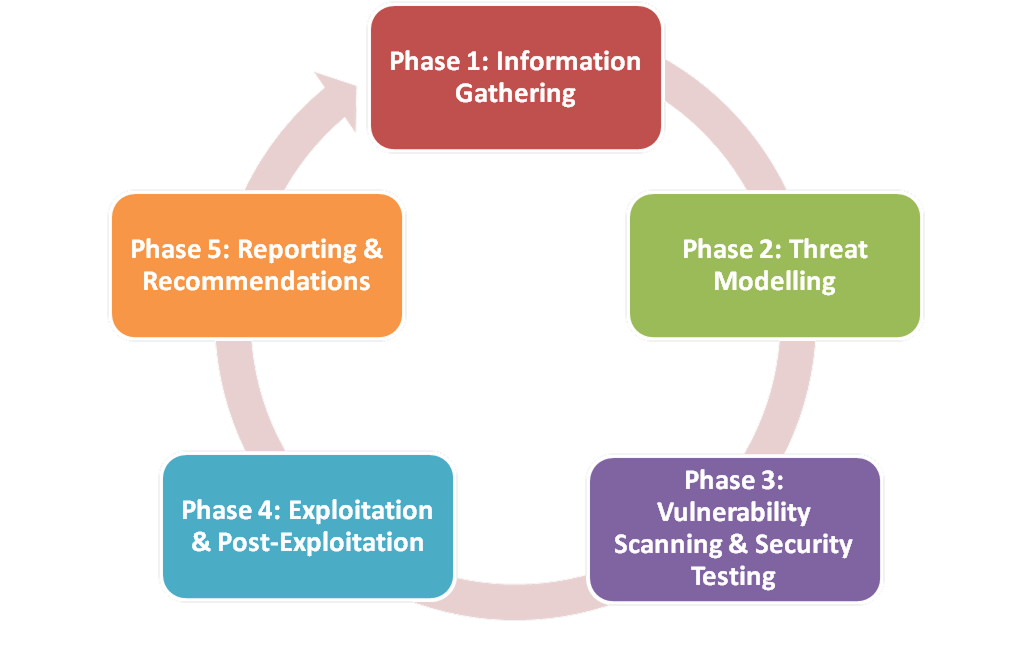
Phase 1 –Information Gathering
In phase 1, we focused on understanding how the web application was built, exposed, and used. We established visibility into application architecture, functionality, authentication flows, and user roles to build a reliable application map that would support targeted testing in subsequent phases.
Key Activities
- Application Architecture & Surface Mapping
- Identified application entry points, URLs, APIs, and supporting services.
- Mapped application components such as front-end interfaces, back-end services, and databases.
- Identified integration points with internal systems and third-party services.
- Reviewed application deployment context, including hosting platform and network exposure.
- Technology Stack Identification
- Identified web server software, application frameworks, and runtime environments.
- Determined programming languages, libraries, and middleware in use.
- Analysed HTTP headers, responses, and error messages for technology indicators.
- Identified database technologies and supporting backend services where observable.
- User Roles & Access Flow Analysis
- Identified authentication mechanisms and supported login methods.
- Mapped user roles, privilege levels, and access boundaries.
- Documented typical user workflows and functional paths.
- Identified administrative interfaces and restricted functionality.
Phase 2 –Threat Modelling
During phase 2, we translated the information gathered into attacker-focused scenarios. We identified where and how the application could be abused and prioritized testing based on exposure, functionality, and potential impact. This allowed us to focus our efforts on areas of meaningful risk.
- Attack Vector Identification
- Identified attack surfaces related to authentication, session handling, and user input.
- Highlighted high-risk features such as file uploads, APIs, and administrative functions.
- Identified trust boundaries between users, services, and application components.
- Mapped externally influenced inputs that could impact backend logic or data stores.
- Risk-Based Test Prioritization
- Prioritized testing areas based on likelihood of exploitation and business impact.
- Aligned test focus with OWASP Top 10 risk categories.
- Identified functions handling sensitive data or privileged operations.
- Defined exploitation constraints and validation limits.
Phase 3 – Vulnerability Scanning & Security Testing
For phase 3 of this engagement, we conducted structured security testing across all relevant web application domains. We combined automated scanning with targeted manual testing to identify vulnerabilities that automated tools alone could not reliably detect. All findings were validated to minimize false positives.
The activities below reflect the testing patterns performed.
- Automated Vulnerability Scanning
- Scanned the application for common web vulnerabilities such as injection, XSS, and insecure headers.
- Identified outdated components and known vulnerabilities.
- Detected insecure configurations and missing security controls.
- Used scan results to guide deeper manual testing.
- Authentication Testing
- Tested for brute-force resistance and lockout mechanisms.
- Assessed username enumeration through authentication responses.
- Validated handling of failed login attempts and timeout enforcement.
- Tested replay of authentication data and session reuse scenarios.
- Session Management Testing
- Evaluated session token randomness, lifecycle, and expiration.
- Tested session fixation, hijacking, and reuse across clients.
- Validated logout behaviour and session invalidation.
- Assessed cookie security attributes and token separation.
- Authorization & Access Control Testing
- Tested horizontal and vertical privilege escalation.
- Validated enforcement of role-based access restrictions.
- Attempted direct object access and forced browsing.
- Tested access to administrative and restricted functions.
- Input Validation & Injection Testing
- Tested for SQL injection, command injection, and template injection.
- Validated server-side input validation for type, length, and format.
- Tested manipulation of hidden fields, parameters, and headers.
- Evaluated handling of unexpected or malformed input.
- Business Logic Testing
- Analysed application workflows for logic flaws and abuse scenarios.
- Tested for bypass of intended process sequences.
- Validated transaction integrity and state management.
- Identified scenarios where legitimate functionality can be misused.
- Output Handling & Client-Side Testing
- Tested for reflected and stored cross-site scripting (XSS).
- Analyzed output encoding and data sanitization.
- Assessed manipulation of responses to access hidden functionality.
- Reviewed client-side controls versus server-side enforcement.
- Web Server & Application Configuration Review
- Identified server-level misconfigurations and default content.
- Reviewed error handling, banners, and information leakage.
- Assessed HTTP security headers and response configurations.
- Identified exposure of administrative or diagnostic interfaces.
Tools Used
- Burp Suite Professional – Used for manual web application testing, request manipulation, session analysis, and vulnerability validation.
- OWASP ZAP – Used for automated vulnerability scanning and baseline security checks.
- Nmap – Used to identify exposed web services and supporting infrastructure.
- SQL map– Used to validate suspected SQL injection vulnerabilities where applicable.
- Browser Developer Tools (Chrome, Firefox, Edge) – Used to inspect client-side logic, analyse cookies and storage, trace authentication flows, and validate client–server interactions during manual web application testing.
- curl / HTTPie– Used for precise request testing, API validation, and repeatable exploit verification.
Phase 4 – Exploitation & Post-Exploitation
During phase 4, we validated the real-world impact of confirmed vulnerabilities by safely exploiting selected findings. Our goal was to demonstrate what an attacker could realistically achieve if the vulnerability were abused without causing operational disruption.
- Controlled Exploitation
- Exploited confirmed vulnerabilities to validate impact.
- Demonstrated unauthorized access, data exposure, or privilege escalation.
- Validated exploitability without compromising system stability.
- Captured evidence supporting each validated finding.
- Post-Exploitation Analysis
- Assessed accessible data and exposed functionality from compromised positions.
- Identified chained attack paths where multiple weaknesses combine.
- Validated potential for lateral impact within the application.
- Assessed business and security implications of exploitation.
Phase 5 – Reporting & Recommendations
For the final phase, we consolidated all validated findings into a clear, structured penetration testing report that communicates technical risks, business impact, and remediation priorities. We ensured findings were traceable, defensible, and actionable for both technical teams and management.
- Findings Documentation
- Documented each finding with description, impact, and evidence.
- Assigned severity ratings based on exploitability and exposure.
- Referenced affected components and attack paths.
- Included notable positive security controls where observed.
- Risk Assessment & Prioritization
- Contextualized findings against business risk.
- Prioritized remediation based on impact and likelihood.
- Identified systemic weaknesses and recurring patterns.
- Aligned findings with OWASP Top 10 categories.
- Reporting
- Prepared the final penetration testing report including:
- Executive Summary
- Scope and Methodology
- Detailed Findings with Evidence
- Attack Scenarios and Impact Analysis
- Risk Ratings and Observations
- Ensured findings are clearly traceable to tested systems and application components.
- Remediation Guidance
- Provided clear, actionable remediation recommendations.
- Referenced secure coding practices and defensive controls.
- Aligned guidance with SDLC and industry standards such as CIS Controls, OWASP Top 10, and MITRE ATT&CK.
- Supported long-term security improvement initiatives.
Report
At the conclusion of the engagement, Real Secure IT delivereda structured and evidence-driven report that documented the organization’s internal web application security posture in a clear, consistent, and actionable manner. The report provided both a high-level summary and detailed technical findings, allowing stakeholders to understand overall exposure to internal threats while maintaining traceability to individual vulnerabilities.
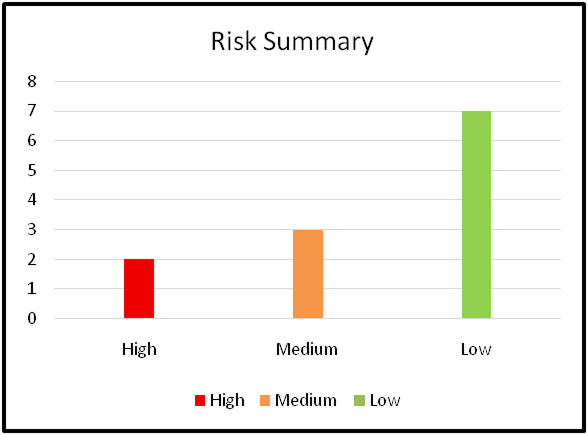
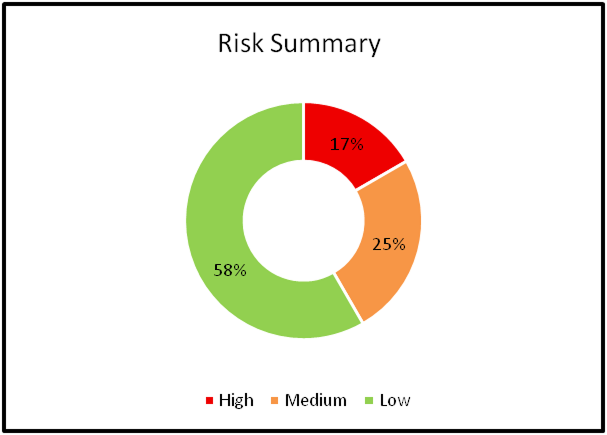
At a high level, the report consolidated identified vulnerabilities by risk level, providing a visual overview of the distribution of high, medium, and low risks across the assessed applications. These representations enabled leadership to quickly identify areas of higher exposure and focus remediation efforts where they were most impactful.
The core of the report was the detailed findings register, where each vulnerability was documented in a structured format. For every finding, the report included a description of the issue, affected systems or applications, potential business impact, ease of exploitation, risk rating, and recommended remediation measures. This approach ensured clarity, consistency, and transparency in how vulnerabilities were assessed and prioritized.
Findings were supported by evidence collected during the assessment, including technical testing results, observed application behaviour, configuration analysis, and controlled proof-of-concept demonstrations. The report also highlighted existing security controls, such as web application firewalls and access restrictions, alongside areas where controls were insufficient or misconfigured, providing a balanced view of the organization’s security posture.
Recommendations were tied directly to the observed vulnerabilities and were presented in practical, actionable terms. This ensured the report not only recorded the assessment outcomes but also served as a roadmap for strengthening internal web application security, mitigating exploitation risks, and improving the organization’s overall internal threat resilience.
Assessment Findings
The Internal Web Application Testing engagement identified a total of 12 security findings, categorized as high, medium, and low. High-risk findings represent areas with the greatest potential to cause operational disruption, data loss, unauthorized access, or reputational damage if unmitigated. Each high-risk finding is analyzed below with a detailed explanation of its cause, impact, and security implications.
High-Risk Findings
- Information Disclosure via Publicly Accessible WSDL File (Risk: High)
During the internal web application penetration testing assessment, a publicly accessible Web Services Description Language (WSDL) file was identified on an internally hosted web service. The WSDL file was accessible without authentication via the service endpoint and exposed detailed metadata about the web service, including available methods, input and output parameters, and endpoint configurations.
The exposed WSDL allowed anonymous users to enumerate service functionality and directly interact with sensitive operations. Multiple confidential endpoints were accessible without authentication, including methods capable of retrieving emergency ticket details, enumerating user privilege information, and querying geolocation-related data. The majority of the identified service endpoints were accessible during testing without requiring valid credentials.
Such exposure significantly increases the attack surface within the internal network. By analyzing the WSDL file, an attacker can gain a comprehensive understanding of application logic and construct crafted SOAP requests to invoke backend functions. If exploited by a malicious insider or by an external attacker who gains internal access, this weakness could result in unauthorized data disclosure, privilege escalation, and potential abuse of critical operational functions.
Cause:
- WSDL publishing is enabled in the production environment without access restrictions.
- Lack of authentication enforcement on sensitive web service endpoints.
- Absence of role-based access control validation before executing backend service methods.
- Insufficient configuration hardening to prevent metadata exposure in production systems.
Consequences and Security Implications:
- Unauthorized Data Access: Attackers may retrieve sensitive information such as emergency ticket details and user privilege data.
- Privilege Enumeration: Exposure of privileged user information may assist in targeted attacks or credential abuse.
- Business Logic Exploitation: Detailed service method disclosure enables attackers to craft targeted SOAP requests to manipulate application behavior.
- Internal Threat Amplification: Any compromised internal account or system could leverage the exposed endpoints to escalate access or extract sensitive data.
Existing Controls:
- The application is hosted within the internal network environment.
- Standard internal access segmentation controls are in place.
Gaps:
- WSDL metadata is publicly accessible without authentication.
- Sensitive service methods are callable anonymously.
- No IP-based or role-based restrictions are enforced on exposed endpoints.
- Lack of monitoring or alerting for unauthorized service invocation attempts.
Proof of Concept (PoC):
The following steps demonstrate that the identified internally hosted web service was accessible without authentication, allowing enumeration of sensitive service functionality and data, confirming insufficient access controls.
- Accessing the Web Service WSDL File:
Using an internal testing workstation, the WSDL file for the hosted service was accessed anonymously. The request retrieved the service definition, exposing all available methods, input/output parameters, and endpoint configurations. This confirmed that sensitive service metadata could be viewed without authentication, providing insight into the structure of the service and the operations it supports.
- Enumeration of Emergency Records:
The Get All Emergencies endpoint was queried without authentication. The response returned detailed emergency records, including descriptions, timestamps, and spatial coordinates. This confirmed that sensitive operational information, such as emergency tickets, could be retrieved by any unauthenticated user.
- Retrieving User Privileges:
The get user Privileges endpoint was accessed anonymously, returning a list of privileges assigned to administrative users. This confirmed that sensitive user privilege information could be enumerated without authentication, potentially allowing attackers to identify high-value accounts or map privilege structures.
- Querying the Search Endpoint:
The search endpoint was accessed without authentication, returning structured data including category identifiers and location coordinates for internal facilities. This demonstrated that system metadata and facility-related information could be retrieved by unauthenticated users, providing attackers with information that could be used to plan targeted attacks or operational disruption.
Recommended Remediation Strategy:
- Disable WSDL Publishing in Production: Disable the ?wsdl metadata exposure in production environments through application or web server configuration settings unless explicitly required for operational integration. Where disabling is not feasible, ensure that metadata access is restricted to authenticated and authorized users only.
- Enforce Authentication on All Service Endpoints: Configure the application to require strong authentication mechanisms (e.g., integrated authentication or token-based authentication) before allowing invocation of any web service method, ensuring that anonymous requests are rejected at the service layer.
- Implement Role-Based Access Controls (RBAC): Apply role-based authorization checks at the application logic level to ensure that only users with explicitly assigned privileges can access sensitive operations such as emergency ticket retrieval, privilege enumeration, and search-related functions.
- Apply IP-Based Access Restrictions (If Required): Limit access to administrative or sensitive service endpoints to approved internal subnets or trusted application servers using firewall rules or reverse proxy access control lists.
- Enable Logging and Monitoring of Service Calls: Configure centralized logging for all web service requests, including failed authentication attempts and access to sensitive methods, and integrate these logs with security monitoring systems to enable early detection of suspicious activity.
Impact of Remediation:
- Prevents unauthorized access to sensitive web service functionality.
- Reduces the risk of internal privilege escalation and data exposure.
- Limits application metadata disclosure that could aid targeted attacks.
- Strengthens overall internal web application security posture.
- Admin Page Disclosure (Risk: High)
During the assessment, it was identified that a publicly accessible enterprise web application did not properly enforce authentication controls on certain administrative resources. By directly navigating to a specific administrative interface path, it was possible to access administrative components without providing valid user credentials, effectively bypassing the intended login controls.
Exposure of administrative or internal system interfaces significantly increases the attack surface, as unauthorized users may gain visibility into system configurations, management functionality, or sensitive operational information intended only for privileged users. If exploited, such exposure could allow attackers to gather reconnaissance data, identify additional vulnerabilities, or perform unauthorized administrative actions depending on the level of functionality exposed.
Cause:
- Improper authentication enforcement on administrative application paths.
- Misconfigured access-control rules allowing direct access to protected directories.
- Lack of periodic verification of authentication enforcement across administrative interfaces.
Consequences and Security Implications:
- Unauthorized Information Disclosure: Exposure of administrative interfaces may reveal configuration settings, system architecture details, or operational parameters intended only for privileged administrators.
- Facilitated Targeted Attacks: Information gathered from administrative pages can assist attackers in crafting more precise exploitation attempts against the application or its supporting infrastructure.
- Administrative Function Abuse: If any management functions are accessible, attackers may attempt unauthorized configuration changes, trigger administrative actions, or manipulate operational settings, potentially impacting system integrity.
- Increased Risk of Service Disruption: Knowledge of backend administrative components can enable attempts to manipulate or overload management functions, potentially affecting system availability.
Existing Controls:
- Standard application login mechanisms are implemented for primary application access.
- Network-level access restrictions are present for some internal resources.
Gaps:
- Administrative directories are not consistently protected by authentication checks.
- Access-control validation for privileged interfaces is not periodically verified.
- Lack of monitoring controls detecting unauthorized access attempts to administrative endpoints.
Proof of Concept (PoC):
The following steps demonstrate that an administrative interface associated with an internally hosted application was accessible without proper authentication controls, allowing exposure of system monitoring and configuration information.
- Direct Access to Administrative Interface:
Using a standard web browser, the administrative monitoring page of the hosted application (SAP Internet Communication Manager) was accessed directly by navigating to the administrative endpoint without completing any authentication process. The system granted access to the administration dashboard, confirming that authentication enforcement was not properly applied to the administrative path.
- Exposure of System Monitoring Information:
Once accessed, the administrative interface displayed system-level monitoring information, including the status of the Internet Communication Manager service, process identifiers, thread activity, active services, and operational statistics such as connection usage and queue entries. The interface also provided access to monitoring menus, service details, and system release information, confirming that sensitive operational data intended only for authorized administrators was visible without authentication.
Recommended Remediation Strategy:
- Apply Vendor Security Updates:Implement the relevant security patch (Security Note 2258786) issued by SAP to address the identified authentication enforcement issue.
- Enforce Authentication on Administrative Paths:Configure application and web server access-control rules to ensure that all administrative directories require successful user authentication before access is granted.
- Restrict Administrative Interfaces to Trusted Networks:Where operationally feasible, limit access to administrative endpoints to authorized internal IP ranges or management networks.
- Conduct Access-Control Validation Reviews:Perform periodic testing to verify that all privileged application components consistently enforce authentication and authorization requirements.
Impact of Remediation:
- Prevents unauthorized access to administrative application components.
- Reduces the risk of reconnaissance and configuration-level attacks.
- Strengthens overall access-control enforcement across critical application interfaces.
- Improves assurance that privileged resources remain accessible only to authorized personnel.
Medium and Low-Risk Findings Summary
In addition to the high-risk issues identified, the assessment highlighted several medium and low-risk findings. While these findings do not pose an immediate or critical threat to the organization, they represent control gaps and process weaknesses that could increase exposure over time if not addressed. In complex IT environments, the accumulation of such gaps can weaken overall security maturity and create pathways for more severe incidents.
Medium Findings
- Directory Listing
Risk: Medium
During the assessment, it was observed that directory listing is enabled on several directories of the hosted web application. This allows unauthenticated users to view the contents of directories via a web browser. Accessible directories may include scripts, configuration files, backups, or other sensitive resources that could provide insight into the system’s structure. Such exposure increases the potential for attackers to identify exploitable components or misconfigurations.
Impact:
Exposed directories can give attackers insight into the web application’s architecture and internal file organization. This information could be leveraged to plan targeted attacks or exploit other vulnerabilities. Confidential scripts or operational files may be unintentionally disclosed, increasing the risk of misuse. Over time, this weakens the overall security posture of the hosted application.
Recommendations:
Disable directory listing on all web servers. For Apache, ensure Options -Indexes is configured in the main configuration or .htaccess file. For IIS, disable “Directory Browsing” via IIS Manager. For Nginx, remove or comment out the autoindex on; directive. Conduct periodic reviews to ensure new directories do not expose sensitive content.
- TLS Version 1.0 Protocol Enabled
Risk: Medium
During the assessment, it was noted that the hosted web applications and associated servers still support TLS Version 1.0. This protocol is outdated and contains several known weaknesses, making it vulnerable to downgrade attacks and cryptographic exploits. Continued use of TLS 1.0 increases the likelihood that encrypted communications could be compromised, undermining confidentiality and integrity of transmitted data.
Impact:
Supporting TLS 1.0 exposes the system to attacks such as POODLE and BEAST, which can compromise data confidentiality and session integrity. Weak encryption and outdated hashing algorithms may be exploited to intercept sensitive data or compromise sessions, potentially affecting application confidentiality and user trust.
Recommendations:
Disable TLS 1.0 across all web servers and applications. Only support TLS 1.2 or higher (ideally TLS 1.3) to ensure secure and performant encryption. Update SSL/TLS libraries such as OpenSSL or server-native libraries to enforce modern, secure protocol versions. Test applications to confirm compatibility with updated protocols.
- Expired SSL/TLS Certificate
Risk: Medium
The assessment found that the SSL/TLS certificate used by the hosted application had expired. Expired certificates cause browsers and clients to display security warnings, reducing trust in the application and potentially interrupting secure communications. Unattended certificate expiration can expose users to man-in-the-middle attacks or data interception, particularly in environments where sensitive operational or administrative data is transmitted.
Impact:
Expired certificates break the trust chain between clients and servers, causing warning messages that may confuse or alarm users and reduce confidence in secure communications. In addition, outdated certificates may allow attackers to intercept or tamper with communications, increasing the risk of unauthorized access or operational disruption.
Recommendations:
Renew the SSL/TLS certificate promptly via the internal Certificate Authority (CA) or trusted public CA. Distribute the CA root certificate across all client devices and servers to maintain trust. Implement a certificate management process to track expiration dates and automate renewal notifications to prevent future lapses.
Low Findings
- Server Information Disclosure
Risk: Low
During the assessment, it was observed that the hosted applications disclose server technology details via HTTP response headers. Specifically, the Server header reveals the underlying web server and platform information. Exposing such details can aid attackers in identifying potential weaknesses specific to the disclosed technology. While this does not directly allow exploitation, it increases the likelihood of targeted attacks by providing reconnaissance information about the environment.
Impact:
Disclosure of server technology details may help attackers craft attacks tailored to specific server versions or software. This can lead to a higher probability of successful exploitation and compromise of system components. Maintaining these headers may also weaken the perceived security posture of the organization.
Recommendations:
Configure the web server and hosted applications to suppress or remove server technology details from HTTP response headers. This reduces the amount of information available to potential attackers and strengthens security through minimal information exposure.
- Error Message Disclosure
Risk: Low
During testing, supplying invalid parameters to certain application endpoints resulted in detailed error messages being displayed. These messages revealed backend technology information, including Oracle Embedded PL/SQL Gateway version details and other configuration specifics. Such disclosures can assist attackers in fingerprinting the technology stack and planning attacks targeting known vulnerabilities associated with that software. Proper error handling and sanitization are needed to prevent sensitive information leakage.
Impact:
Detailed error messages can reveal backend software versions and configuration details, aiding attackers in exploiting known vulnerabilities. This increases the risk of targeted attacks, reduces system confidentiality, and may undermine user trust if error messages are exposed externally.
Recommendations:
Implement generic error handling for all user-facing endpoints. Display messages such as “An error occurred. Please contact support.” to prevent disclosure of technology, stack, or configuration details while maintaining usability and user guidance.
- Cross-Origin Resource Sharing (CORS) Misconfiguration
Risk: Low
The assessment identified that the hosted application’s HTTP responses include the Access-Control-Allow-Origin: * header. This configuration allows any external domain to make cross-origin requests to the server. While suitable for public APIs, applying this configuration to sensitive or internal applications can result in unauthorized data access if endpoints are not properly secured. This misconfiguration increases the risk of data leakage and abuse through CORS.
Impact:
Allowing all origins in the CORS configuration permits external websites to interact with the application’s resources. If sensitive endpoints are accessible without authentication, attackers could perform unauthorized actions or access data in the context of a valid user session, potentially exposing confidential information.
Recommendations:
Restrict allowed origins to trusted domains only. Replace the wildcard (*) with a list of approved domains and ensure only authorized front-end applications can interact with backend services. Review authentication requirements for all endpoints accessible via CORS to prevent unauthorized access.
- ASP.NET Version Disclosure via Unhandled Exception
Risk: Low
During the assessment, triggering unhandled exceptions in a hosted ASP.NET application resulted in error pages disclosing detailed information, including stack traces and ASP.NET framework version details. This behavior indicates insufficient input validation and exception handling, exposing internal application structure and technologies. Such information can assist attackers in identifying weaknesses and tailoring attacks against the application.
Impact:
Exposing application stack traces and framework details can aid attackers in targeting specific implementation weaknesses. This increases the likelihood of exploitation and may reveal sensitive internal structures or logic within the application.
Recommendations:
Implement proper exception handling to suppress detailed error output in production environments. Configure custom error pages that hide stack traces and framework information to prevent technology disclosure while maintaining user-friendly feedback.
- Cleartext Transmission of Sensitive Information
Risk: Low
During the assessment, it was identified that certain application resources were accessible over unencrypted HTTP connections. Sensitive information, including user and organizational data, may be transmitted without encryption. This exposes data in transit to interception through techniques such as man-in-the-middle (MITM) attacks, particularly on untrusted or shared networks. The absence of enforced secure communication channels weakens transport-layer security controls.
Impact:
Transmission of sensitive information over cleartext channels increases the risk of credential theft, session hijacking, and unauthorized access. Attackers positioned on the network could intercept or manipulate data, potentially compromising confidentiality and user trust.
Recommendations:
Enforce HTTPS across all application endpoints and redirect all HTTP requests to secure HTTPS connections. Support only secure TLS versions (TLS 1.2 or higher) and implement HTTP Strict Transport Security (HSTS) to prevent protocol downgrade attempts. Regularly review configurations to ensure encrypted transmission is consistently applied.
- User-Controlled Error Message Injection
Risk: Low
The assessment revealed that the application reflects user-supplied input directly within displayed error messages through URL parameters. This behavior allows attackers to craft URLs containing arbitrary messages that appear within the legitimate application interface. Although this does not directly execute malicious code, it can be leveraged in phishing or social engineering campaigns to deceive users. Such reflection of unsanitized input weakens interface integrity and trust.
Impact:
Attackers may generate legitimate-looking URLs displaying misleading messages to trick users into performing unintended actions. This could facilitate phishing attacks, credential harvesting, or malware distribution, ultimately undermining user confidence in the application.
Recommendations:
Use predefined, static server-side error messages instead of displaying user-controlled text. If dynamic messaging is required, validate and map parameters to a controlled set of approved responses. Implement proper input validation to prevent unintended message reflection.
- Outdated jQuery Library with Multiple XSS Vulnerabilities
Risk: Low
During the assessment, it was observed that the application uses a version of the jQuery library older than 3.5.0. Versions greater than or equal to 1.2 and prior to 3.5.0 contain multiple documented cross-site scripting (XSS) vulnerabilities. Using outdated client-side libraries increases the likelihood that known security flaws may be exploited. Maintaining unsupported or legacy dependencies weakens the overall application security posture.
Impact:
Known XSS vulnerabilities in outdated jQuery versions may allow attackers to inject and execute malicious scripts in users’ browsers. This could result in session hijacking, credential theft, defacement, or redirection to malicious websites, impacting confidentiality and integrity of user interactions.
Recommendations:
Upgrade jQuery to version 3.5.0 or later to remediate known vulnerabilities. Conduct a dependency review to ensure all third-party libraries are maintained and updated regularly. Implement a patch management process to monitor and remediate outdated components promptly.
Remediation Strategy
The remediation strategy developed for this engagement is designed to systematically address the weaknesses identified during the internal web application testing in a structured, risk-prioritized, and sustainable manner. The strategy focused on eliminating exposed administrative services, strengthening authentication enforcement, improving encryption standards, and hardening web server configurations across the assessed environment.
Remediation actions were aligned to the assessed risk levels, which were determined based on both ease of exploitation and business impact. Priority was given to high-risk findings that could enable unauthorized access to administrative functions, sensitive operational data exposure, or service disruption, followed by structured improvements for medium and low-risk findings.
- Immediate Remediation Actions (High-Risk Findings)
High-risk findings identified during the assessment required urgent corrective measures due to their potential to expose sensitive administrative interfaces, system monitoring functions, or privileged functionality without proper authentication controls. Immediate remediation actions were defined to reduce exposure in the short term while longer-term improvements were planned.
Key remediation measures included:
- Restricting unauthenticated access to administrative and monitoring interfaces, including exposed service endpoints and management dashboards (such as the Internet Communication Manager (ICM) administration dashboard), by enforcing strong authentication, role-based authorization, and network-level access restrictions.
- Securing exposed APIs and backend services by implementing consistent authentication validation, eliminating anonymous endpoint access, and applying proper authorization checks for privileged operations.
- Hardening application configurations to ensure that system monitoring information, operational statistics, and administrative functionality are accessible only to authorized administrative users.
- Conducting immediate review and remediation of externally accessible administrative paths and service interfaces to reduce the likelihood of reconnaissance, privilege misuse, or unauthorized operational actions.
These actions were intended to rapidly reduce the organization’s immediate attack surface and prevent unauthorized administrative-level interaction with exposed application components.
- Short- to Medium-Term Improvements (Medium-Risk Findings)
Medium-risk findings were addressed through targeted configuration hardening and protocol-level improvements focused on strengthening encryption standards, certificate management, and web server security controls. While these risks did not require immediate corrective action, they represented areas where weaknesses could escalate if left unaddressed.
Recommended remediation initiatives included:
- Disabling directory listing on all web servers and implementing secure configuration baselines to prevent unauthorized exposure of application file structures and internal resources.
- Disabling legacy protocols such as TLS 1.0 and enforcing TLS 1.2 or higher across all systems to ensure that encrypted communications meet modern security standards.
- Renewing expired SSL/TLS certificates and implementing automated certificate lifecycle monitoring to prevent recurrence of certificate expiration.
- Reviewing supported cipher suites and protocol configurations to ensure only secure versions and approved cryptographic standards are enabled on externally accessible systems.
These actions improved configuration consistency across externally accessible systems, reduced exposure to known security weaknesses, and reduced the likelihood that medium-risk weaknesses evolve into higher-risk exposures over time.
- Long-Term Security Maturity Enhancements
On top of addressing specific findings, the remediation strategy emphasized longer-term initiatives designed to strengthen the organization’s overall web security posture and improve monitoring and governance across supporting applications and services.
These initiatives focused on:
- Implementing structured patch and dependency management processes to ensure third-party components, such as jQuery libraries, are regularly updated to supported and secure versions.
- Standardizing secure error-handling practices to prevent disclosure of server versions, stack traces, or configuration details through application responses.
- Restricting CORS (cross-origin resource sharing) configurations to trusted domains and minimizing unnecessary exposure of HTTP response headers.
- Enforcing HTTPS across all application endpoints and implementing HSTS to prevent downgrade or cleartext transmission risks.
- Aligning application development and configuration practices with recognized security frameworks such as OWASP Top 10, CIS Critical Security Controls, and MITRE ATT&CK guidance to support continuous improvement and defensive maturity.
These long-term initiatives support the shift from reactive vulnerability remediation to a proactive, risk-driven web application security model.
- Prioritization and Implementation Approach
All remediation activities were prioritized based on:
- Risk rating
- Potential business and operational impact
- Ease of Exploitation
- Exposure of administrative or sensitive interfaces
This ensured that remediation efforts were sequenced logically and delivered measurable risk reduction over time. Where appropriate, remediation actions were grouped into phased implementation cycles aligned with business priorities, allowing security improvements to be implemented without causing disruption to web services and business operations.
- Ongoing Monitoring and Validatio
To ensure remediation efforts remained effective, the strategy emphasized the importance of continuous monitoring and periodic reassessment. Implemented fixes should be validated through targeted re-testing to confirm that vulnerabilities were fully mitigated and that no new exposures were introduced.
As part of Real Secure IT’s remediation support approach, validation and follow-up activities are typically conducted within 1 to 3 business days for high-risk findings, ensuring that critical exposures are addressed and confirmed promptly. Medium and low-risk findings are generally reviewed and validated over a 1 to 2-week period, providing adequate time for implementation without slowing overall progress in reducing risk.
By adopting this approach, the organization was positioned to maintain an improved web application security posture and ensure that remediation activities produce sustained risk reduction rather than one-time corrective actions.
Conclusion
The Internal Web Application Testing engagement provided the organization with a clear view of the security posture of its internal web applications and supporting components. Using a structured, risk-based testing methodology, the assessment focused on identifying vulnerabilities that could realistically be exploited and evaluating how these weaknesses could affect business operations, data protection, and application availability.
The testing identified several high-risk vulnerabilities requiring immediate remediation, alongside medium and low-risk weaknesses that, if left unresolved, could progressively increase the organization’s exposure to unauthorized access, data leakage, and service disruption. Beyond the individual technical findings, the results also highlighted opportunities to further strengthen secure configuration practices, patch management processes, and application security controls across the internal environment.
The remediation strategy was developed in a prioritized and practical manner, allowing the organization to address the most critical risks first while planning corrective actions for lower-severity issues in a controlled and manageable sequence. This approach supports measurable risk reduction while ensuring that remediation activities can be carried out without unnecessary operational disruption.
Overall, the engagement strengthened the organization’s ability to identify, evaluate, and manage security risks affecting its internal web applications. Through continued vulnerability management, periodic reassessment, and the integration of secure configuration and development practices, the organization is better positioned to maintain a stable and resilient internal application environment.
As part of the engagement, Real Secure IT delivered a detailed Internal Web Application Testing report documenting identified vulnerabilities, supporting technical evidence, and prioritized remediation recommendations. A dedicated management presentation was also conducted to present key findings, highlight critical risk areas, and support leadership in aligning remediation efforts with business priorities.
Request a Web Application Security Assessment
Real Secure helps UAE organisations uncover exploitable web application vulnerabilities, validate existing controls and prioritise remediation before weaknesses affect operations or sensitive data.
Request a Web Application Security Assessment or explore our cybersecurity assessment services.