
Flap Barrier Gates in the UAE: Combining Secure Access with Modern Design
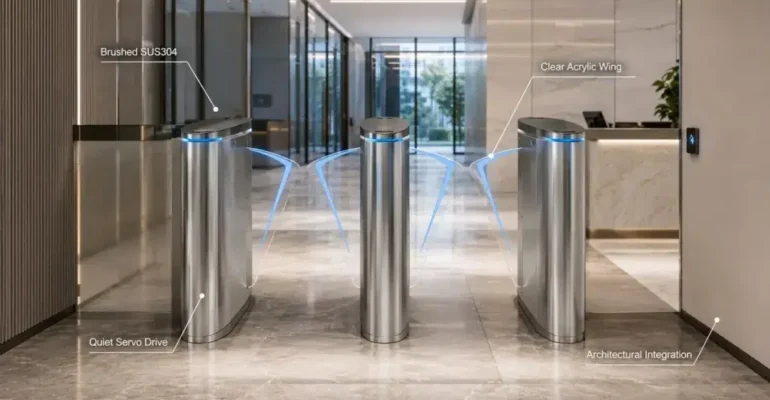
Flap Barrier Gates in the UAE: Combining Secure Access with Modern Design
 admin
admin
Modern entrance security should protect a building without compromising its appearance or making pedestrian movement unnecessarily difficult. This is why flap barrier gates in the UAE have become a popular choice for corporate offices, commercial buildings, government facilities, transport environments and other high-traffic properties.
Today’s systems combine controlled pedestrian access, rapid throughput and architectural flexibility. They can also integrate with cards, mobile credentials, QR codes, biometrics, visitor-management systems and other security platforms.
Real Secure supplies and integrates flap barrier and speed-gate solutions for UAE projects, working with experienced manufacturers to match the equipment to each site’s operational, security and design requirements.
What Is a Flap Barrier Gate?
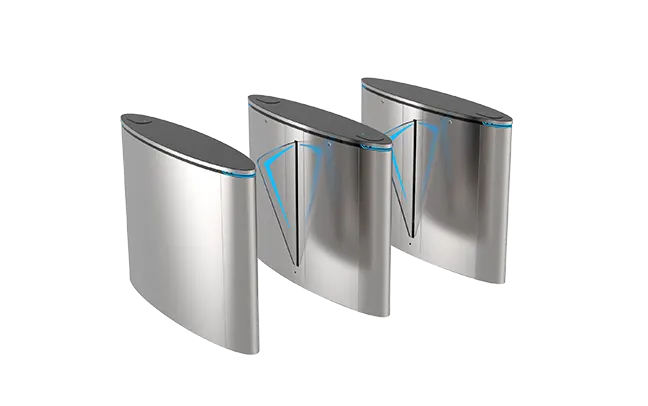
A flap barrier gate is an automated pedestrian-control system that uses retractable barrier wings to regulate movement through an entrance.
After a user presents an authorised credential, the barrier retracts to permit passage. It then closes after the person has moved through the lane. Infrared sensors monitor the passage area and help the controller determine when it is safe to open or close the barrier.
Flap barriers are particularly suitable for sites requiring:
- Fast and orderly pedestrian movement
- A professional, modern entrance
- Integration with electronic access control
- Detection of unauthorised or irregular passage
- Multiple lanes for employees, visitors or contractors
- A controlled entrance without the appearance of a heavy physical barrier
Compared with traditional tripod turnstiles, flap barriers generally provide a more refined appearance and smoother user experience. The correct solution, however, depends on the required security level, traffic volume, lane width and site conditions.
Why Design Is Becoming More Important
Turnstiles were once treated as standalone security equipment, often installed after the architectural design had already been completed. This sometimes resulted in bulky stainless-steel units that looked disconnected from the surrounding lobby or reception area.
Modern access-control planning takes a different approach. Flap barriers can now be selected and customised to complement the interior design, brand identity and intended visitor experience.
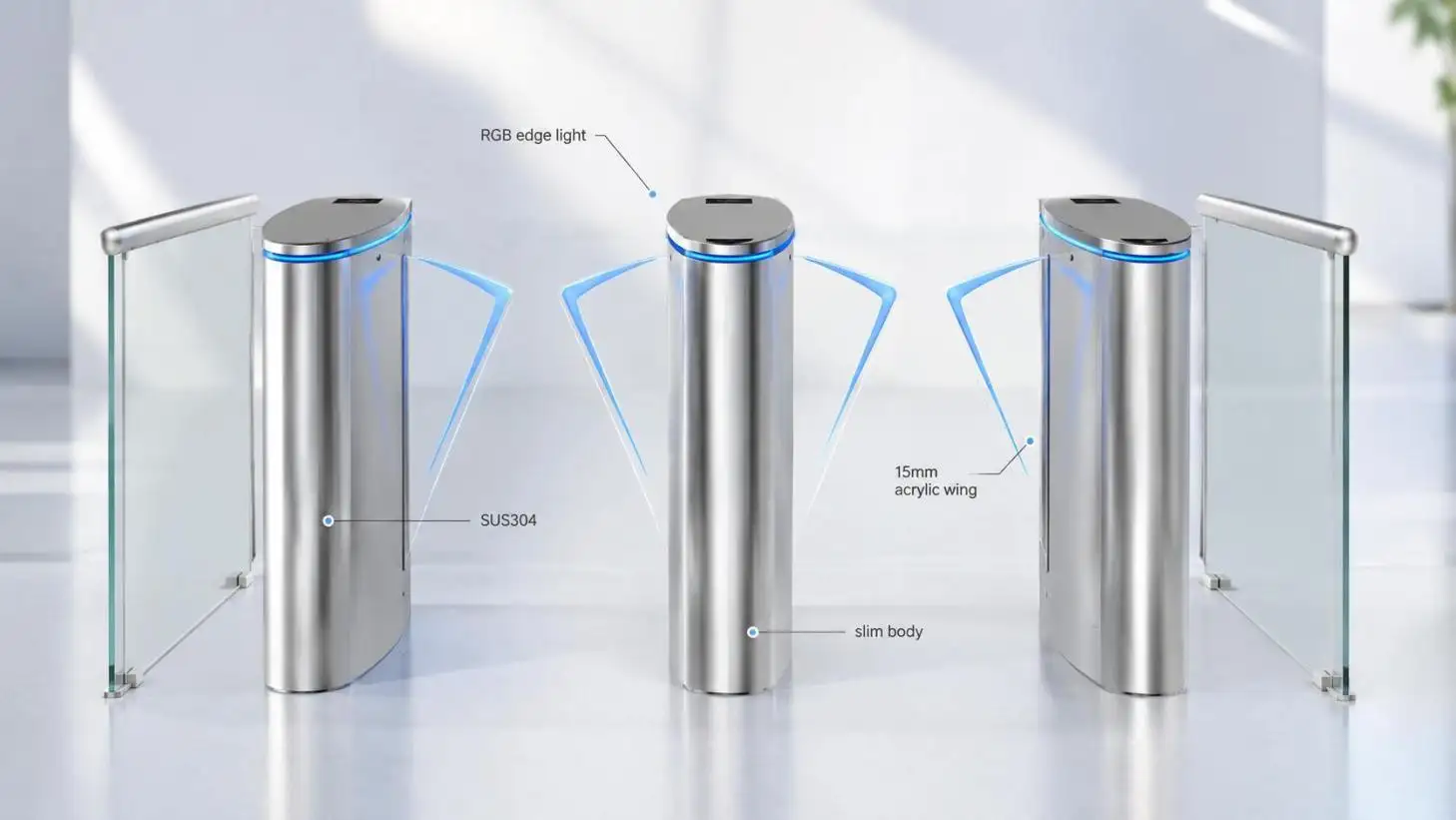
Available options may include:
- Brushed or polished SUS304 stainless-steel cabinets
- Powder-coated finishes in selected colours
- Acrylic barrier wings with different colours or tints
- LED or RGB passage indicators
- Custom top covers and reader-mounting arrangements
- Branding or logo placement
- Compact, standard and wide-passage lane configurations
These options allow architects, consultants and property owners to treat pedestrian security as part of the entrance design rather than as an equipment addition. Customisation must still be balanced with maintainability: components that may require inspection or replacement should remain accessible, and the selected finish should suit the expected traffic and operating environment.
Engineering Behind a Reliable Flap Barrier
Smooth drive mechanism
Modern flap barriers may use brushless servo-motor technology to provide controlled, quiet and consistent barrier movement. Compared with older drive systems, an appropriately engineered servo mechanism can help reduce mechanical shock and improve the experience in quiet corporate and hospitality environments. Motor type, power and operating speed vary by model and should be confirmed during product selection.
Infrared safety sensors
Infrared sensors monitor movement through the lane. Depending on the selected system, the sensor arrangement can support presence detection, anti-pinch protection, direction monitoring, tailgating detection, incorrect-direction alarms and passage-completion detection.
Some configurations are available with multiple infrared sensor pairs for more detailed passage monitoring. Sensor quantity should not be assessed in isolation: the control logic, positioning, sensitivity and commissioning quality are equally important.
Adjustable operating parameters
Site engineers may be able to configure opening speed, closing speed, passage timeout, hold-open delay, alarm behaviour and sensor sensitivity. These settings should reflect the users and operating environment. A corporate employee entrance, for example, may require different behaviour from a visitor attraction, school, transport facility or controlled government building.
Access-Control Integration Options
A flap barrier is only one component of a complete entrance-management system. It must communicate correctly with the selected credential readers, access-control panels and management software.
Common integration options include:
- RFID and smart cards
- Mobile credentials
- QR and barcode readers
- Fingerprint readers
- Facial-recognition terminals
- Visitor-management systems
- Ticketing and payment platforms
- Time-and-attendance software
- Building-management and security platforms
Interfaces such as dry-contact inputs and RS485 may be available depending on the selected controller and model. The interface requirements should be confirmed before ordering so that the gate, reader and access-control platform can be tested as one solution.
For UAE projects, the design should also consider fire-alarm integration, emergency-release behaviour, power-loss operation and the required fail-safe or fail-secure configuration.
Selecting the Right Flap Barrier for a UAE Project
Choosing a suitable system requires more than comparing product photographs or cabinet dimensions.
1. Pedestrian volume
Estimate the number of people expected during normal and peak periods. This helps determine the required number of lanes, credential-reading speed and barrier operating cycle.
2. Required security level
Flap barriers are well suited to supervised and electronically controlled entrances. Higher-risk perimeter areas may require a full-height turnstile or another stronger physical barrier.
3. Standard and accessible lanes
The design should include appropriate passage widths for wheelchair users, visitors carrying luggage, deliveries and other accessibility requirements. An adjacent wide swing-barrier lane is often incorporated into the layout.
4. Indoor or protected-outdoor installation
Not every flap barrier is designed for exposed outdoor use. Humidity, heat, dust, direct sunlight, water exposure and air-conditioning conditions should be reviewed before selecting the cabinet and internal components.
5. Floor, power and data preparation
The floor must be suitable for anchoring the cabinets and routing power, data and interconnection cables. Uneven floors or poorly positioned conduits can affect alignment and installation quality.
6. Emergency operation
The required response during a fire alarm, emergency signal or power failure must be agreed during system design. This should be coordinated with the project’s life-safety consultant and applicable authority requirements.
7. Maintenance access
The gate should allow practical access to motors, sensors, controllers and power components. Availability of replacement parts and technical support should also form part of the selection process.
Customisation Without Unnecessary Delivery Delays
Custom finishes can help align flap barriers with a building’s architectural concept, but extensive customisation may affect manufacturing and delivery schedules.
The most efficient approach is to identify which features are genuinely project-critical. These may include cabinet dimensions, passage width, finish, barrier-wing colour, reader cut-outs, LED behaviour, logo placement and communication interface.
Real Secure works with multiple established hardware manufacturers, allowing the project team to compare suitable configurations, availability and lead times without limiting the solution to a single brand. Fast-track delivery may be possible for selected standard configurations, subject to stock availability, approved specifications and final project requirements.
Installation and Commissioning Matter
Even high-quality equipment can perform poorly if the lane alignment, wiring, sensor calibration or access-control logic is incorrect. A professional deployment should include:
- Site survey and entrance assessment
- Lane and equipment layout
- Power and data coordination
- Access-control interface confirmation
- Mechanical installation and alignment
- Reader and controller integration
- Sensor and passage-logic configuration
- Emergency-operation testing
- User training and handover documentation
- Preventive-maintenance planning
Testing should cover authorised passage, unauthorised entry, reverse movement, tailgating behaviour, obstruction detection and emergency release.
Applications Across the UAE
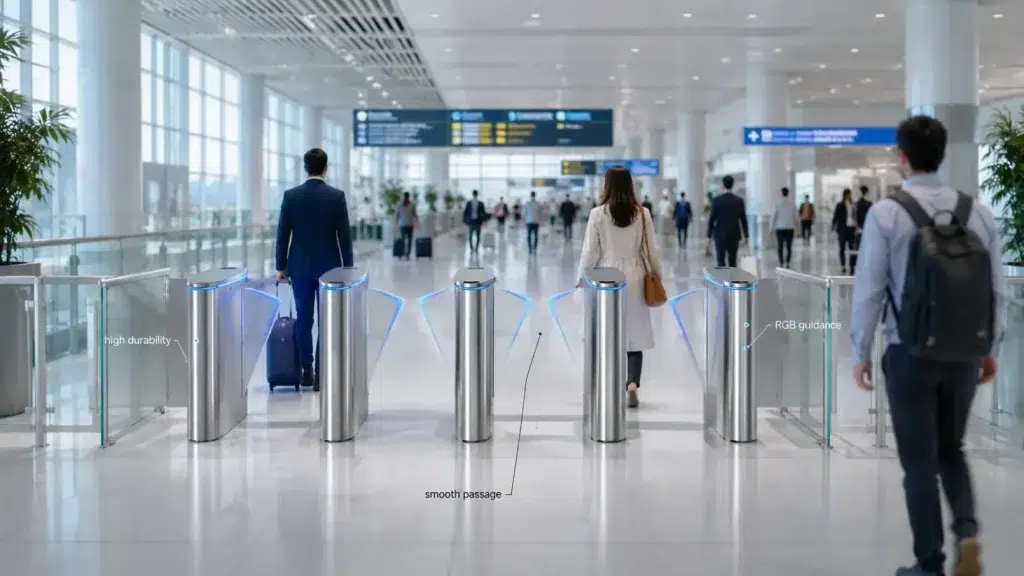
Flap barrier and speed-gate systems can support pedestrian access management in:
- Corporate headquarters and office towers
- Government and administrative buildings
- Banks and financial institutions
- Hotels and mixed-use developments
- Schools, universities and healthcare facilities
- Metro, railway and transport environments
- Leisure and entertainment destinations
- Data centres and controlled technical facilities
- Fitness centres and membership-based venues
The correct gate configuration will vary between these environments. Product selection should therefore be based on the site’s real operating conditions rather than on a single standard specification.
Why Work with Real Secure?
Real Secure provides more than hardware supply. Our team supports the complete process from product selection and entrance planning to integration, installation, testing and after-sales service.
- Access to multiple established manufacturers
- Solutions matched to project requirements and budget
- Fast-track options for selected configurations
- Integration with cards, QR codes, biometrics and visitor systems
- UAE installation and commissioning support
- Experience supporting demanding, high-footfall environments
- Maintenance and technical assistance after handover
Plan Your Flap Barrier Gate Solution
A successful entrance combines security, pedestrian flow, accessibility, architectural appearance and reliable integration.
If you are planning flap barrier gates for an office, commercial building, government facility or high-traffic venue, Real Secure can help evaluate the lane requirements and recommend an appropriate configuration.
Explore our flap barrier and speed-gate solutions or contact Real Secure to discuss your project.
Product images show representative configurations. Final specifications and appearance depend on the selected manufacturer, model and project requirements.